
Cooking With Your Kids to Build Lifelong Healthy Habits
Inviting kids into the kitchen can make family meals feel more fun while helping them become comfortable with a wider variety of foods. These simple, budget-friendly ideas make cooking together realistic for busy families.
6 min read
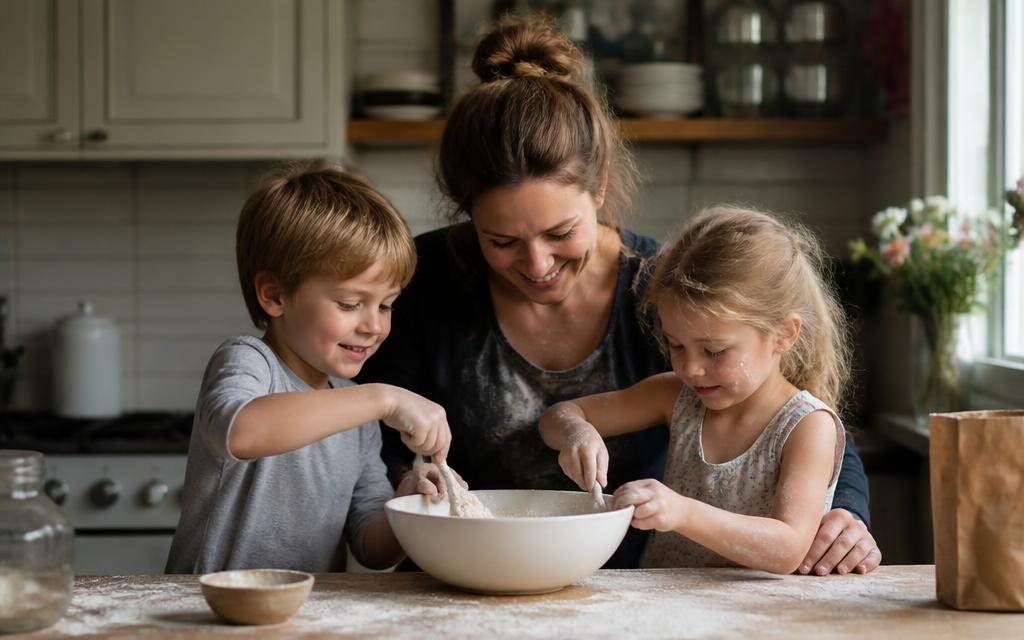
Cooking with kids is not about creating picture-perfect meals or turning every Tuesday night into a baking show. It is about giving children small, repeatable chances to touch, smell, prepare, and enjoy food alongside you.
Those little moments can add up. A child who helps rinse berries, stir soup, or choose a vegetable for taco night may feel more curious about the food on their plate. And when children learn basic kitchen skills early, they gain confidence that can support them through school, adulthood, and eventually their own family meals.
For busy parents, the best approach is simple: invite your child in, give them one age-appropriate job, and let the process be a little messy.
Why kitchen time matters
Kids do not need a nutrition lecture to learn healthy habits. They learn by watching what happens at home: how meals come together, how adults talk about food, and how everyone is welcome at the table.
Cooking together can help children practice:
- Familiarity with fruits, vegetables, proteins, and whole grains
- Basic skills such as washing, measuring, mixing, and following directions
- Patience, turn-taking, and problem-solving
- Confidence in trying foods they helped make
- An understanding that meals do not have to be fancy to be nourishing
It can also ease some pressure for parents. When a child has a small role in dinner, they may be more invested in sitting down and tasting what the family made. That is not a guarantee that picky eating disappears, and it does not need to be the goal. Think of it as gentle exposure, not a battle.
Start with one small job
You do not need to hand over the whole recipe. Choose one task that fits your child's age, attention span, and your own energy that day.
For toddlers and preschoolers:
- Rinse produce in a colander
- Tear lettuce or herbs
- Add pre-measured ingredients to a bowl
- Stir pancake batter or yogurt dip
- Place toppings on homemade pizza
For early elementary kids:
- Measure ingredients
- Crack eggs into a separate bowl
- Mash beans, avocado, or cooked potatoes
- Assemble wraps, snack boxes, or quesadillas
- Use a kid-safe knife for soft foods, with supervision
For older kids and teens:
- Read a recipe and make a grocery list
- Learn how to safely chop ingredients
- Prepare a simple breakfast or lunch
- Cook one part of dinner, such as rice, roasted vegetables, or salad
- Help plan a low-cost meal using pantry staples
Kitchen safety comes first. Teach handwashing, keep handles turned inward, and supervise closely around heat and sharp tools. If you have questions about food safety or your child's individual needs, check with your healthcare provider or a qualified professional.
Make healthy food feel familiar, not forced
Children are often more open to food when it is presented without pressure. Instead of saying, “You have to eat your broccoli,” try, “You helped sprinkle the seasoning on this broccoli. Want to see how it tastes roasted?”
Keep serving a mix of familiar foods and newer foods. A simple family plate might include a main dish, a fruit or vegetable, and a filling carbohydrate such as potatoes, rice, pasta, tortillas, or bread. Add what works for your family's tastes, culture, budget, and schedule.
A helpful rule: parents decide what is offered and when; children can decide whether and how much to eat from what is served. This takes some of the tension out of meals and helps kids listen to their own hunger and fullness cues.
Budget-friendly meals kids can help make
Cooking with children does not require specialty ingredients. In fact, inexpensive staples are often the easiest foods for little helpers to use.
Try these simple ideas:
- Build-your-own oatmeal: Let kids add banana slices, frozen berries, cinnamon, peanut butter, or seeds.
- Bean and cheese quesadillas: Kids can spread mashed beans, sprinkle cheese, and add leftover vegetables.
- Sheet-pan dinner: Children toss chopped vegetables with oil and seasoning while you handle the oven and protein.
- Pasta night: Kids stir sauce, add frozen peas or spinach, and sprinkle cheese.
- Breakfast egg muffins: Let children whisk eggs and add diced vegetables, cheese, or leftover cooked meat before baking.
- Snack plates: Pair crackers or whole-grain toast with cheese, fruit, vegetables, hummus, eggs, or yogurt.
Use frozen and canned produce when it makes life easier. They are practical, often affordable, and can be just as useful as fresh options. Rinse canned beans or vegetables if you prefer, and choose options that fit your family's budget.
Let go of perfection
A child may spill flour, put all the blueberries in one muffin cup, or lose interest halfway through stirring. That is normal. Cooking together is a skill-building activity, not a test of your patience or your parenting.
Choose lower-stress times when possible, such as weekend breakfast, an after-school snack, or prepping vegetables for tomorrow's dinner. On extra busy days, invite your child to set napkins on the table or pick between two side dishes. Those count, too.
The most lasting habit is not a child who eats every vegetable. It is a child who sees food as something approachable, enjoyable, and worth learning about. One small kitchen job at a time, you are building confidence that can travel with them for years.