
Fixing Mom Posture After Carrying Babies and Car Seats
Baby cuddles and car-seat hauling can leave your neck, shoulders, back, and hips feeling stiff and tired. These gentle, realistic posture habits can help you move more comfortably through everyday mom life.
6 min read
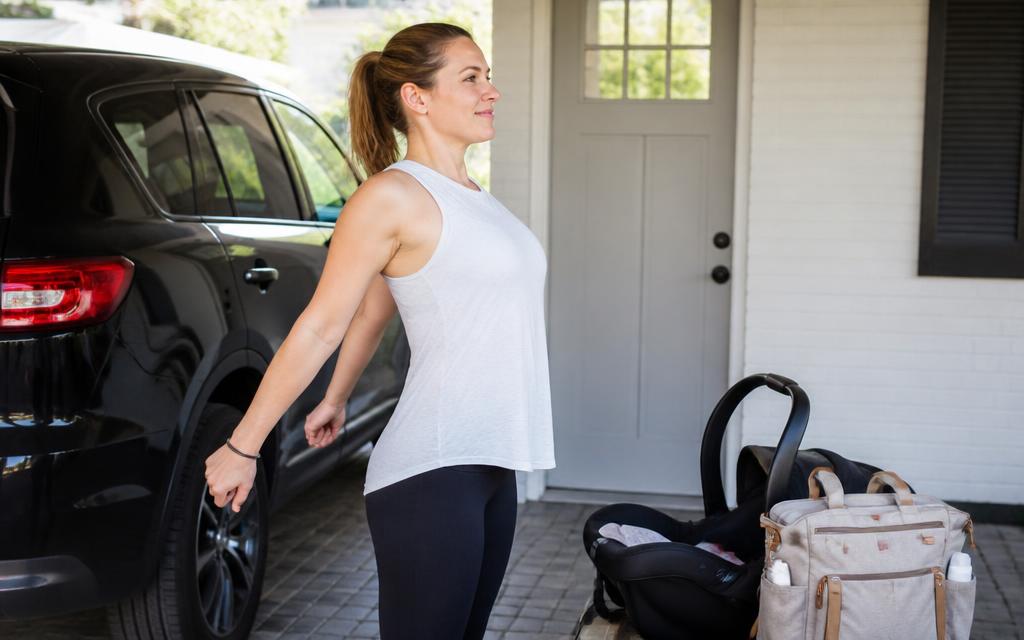
If you have ever caught yourself standing with one hip popped out, your shoulders rounded forward, and a baby balanced on the same side as always, you are in very good company. Carrying little ones, lifting car seats, nursing or bottle-feeding, and looking down at tiny faces all day can encourage some not-so-comfy positions.
This is not about having “perfect” posture. Real life with babies is not a posture workshop. The goal is simply to give your body more variety, strength, and support so daily tasks feel a little easier.
Why Mom Posture Changes
Your body adapts to what it does often. When you repeatedly carry a baby on one hip or lean over a crib, your muscles learn that pattern. Add tiredness, feeding positions, laundry, stroller walks, and hours spent looking down at a phone, and it makes sense that your neck, upper back, low back, or hips may feel tight.
Pregnancy and postpartum recovery can add their own changes, too. Your body has done important work, and it deserves patience—not criticism.
Instead of trying to hold a rigid “shoulders back” pose all day, think about frequent small resets. A comfortable posture is one that changes often.
Start With Your Everyday Carry
You may not be able to avoid carrying your baby or car seat, but you can make a few adjustments.
- Switch sides often. If you always carry your baby on your right hip, try swapping sides during short carries. It may feel awkward at first, and that is okay.
- Keep your load close. Hold baby, diaper bags, and car seats close to your body rather than reaching out with straight arms.
- Use both hands when you can. A car seat is awkward by design. When possible, use two hands to lift and carry it, or bring the stroller closer before lifting.
- Bend through your knees and hips. Before picking up a car seat or baby, get close, soften your knees, and stand up with the load near your center.
- Lighten the extras. A diaper bag packed with every possible item can become another heavy carry. Do a quick weekly cleanout and keep only what you truly use.
If a baby carrier works for your family, it can be a helpful option for distributing weight. Follow the manufacturer’s instructions for fit and safe use.
Try a 5-Minute Posture Reset
You do not need a long workout to begin feeling more open and steady. Try this short routine once a day, or break it into little pieces while your baby plays nearby.
1. Wall breathing (1 minute): Stand with your back near a wall. Let the back of your head, upper back, and hips gently meet the wall if comfortable. Take slow breaths, allowing your ribs to expand. No forceful tucking or bracing needed.
2. Shoulder rolls (30 seconds): Roll your shoulders up, back, and down slowly. Then reverse the direction. Keep your jaw relaxed.
3. Wall slides (1 minute): With your upper back near the wall, slide your arms upward only as far as feels comfortable, then lower them. Think “long neck” rather than squeezing your shoulders hard.
4. Chest opener (1 minute): Stand in a doorway with one forearm resting lightly on the frame. Step forward gently until you feel a mild stretch across your chest. Switch sides.
5. Hip flexor stretch (1 minute): Take a small staggered stance, with one foot behind you. Gently shift your weight forward while keeping your torso tall. Switch sides.
6. Sit-to-stands (30 seconds): From a sturdy chair, stand up and sit down slowly a few times. This simple move builds practical leg and hip strength for all those daily lifts.
Move gently. Stretching should feel mild, not sharp or painful.
Make Feeding and Phone Time Kinder to Your Body
Feeding a baby can involve a lot of forward leaning. Bring your baby toward you with pillows or supports instead of curling your body down toward them. Let your feet rest on the floor or a small stool if that feels good.
During phone time, try raising the screen closer to eye level now and then. You do not need to ban scrolling; simply give your neck a break from the downward angle.
A helpful cue: every time you feed your baby, refill your water, or buckle the car seat, take one slow breath and relax your shoulders. Tiny habits add up.
Build Strength for Real Mom Life
Mobility can feel good, but strength also helps you feel more supported while lifting, carrying, and walking. A few basic moves two or three times per week can be plenty to start:
- Bodyweight squats or chair sit-to-stands
- Glute bridges
- Wall push-ups
- Resistance-band rows
- Gentle bird-dogs, if comfortable
Keep it simple: one or two sets of a few repetitions is a real workout when your schedule is full. Consistency matters more than doing a perfect, lengthy routine.
When to Get Extra Support
New or ongoing pain, numbness, weakness, dizziness, pelvic pressure, or symptoms that make daily life difficult deserve individual attention. Check with your healthcare provider, especially for pregnancy- or postpartum-specific questions. A qualified physical therapist can also offer personalized guidance.
Most importantly, be kind to yourself. Your posture is not a personal failure—it is often a sign that you have been doing a lot of caring. A few mindful adjustments, regular movement, and stronger everyday habits can help you feel more comfortable while you keep showing up for your family.