
Getting a Picky Eater to Try New Foods Without a Fight
Picky eating is a normal phase for many kids, and mealtimes do not have to become a battleground. These low-pressure strategies can help your child get comfortable with new foods one tiny step at a time.
6 min read
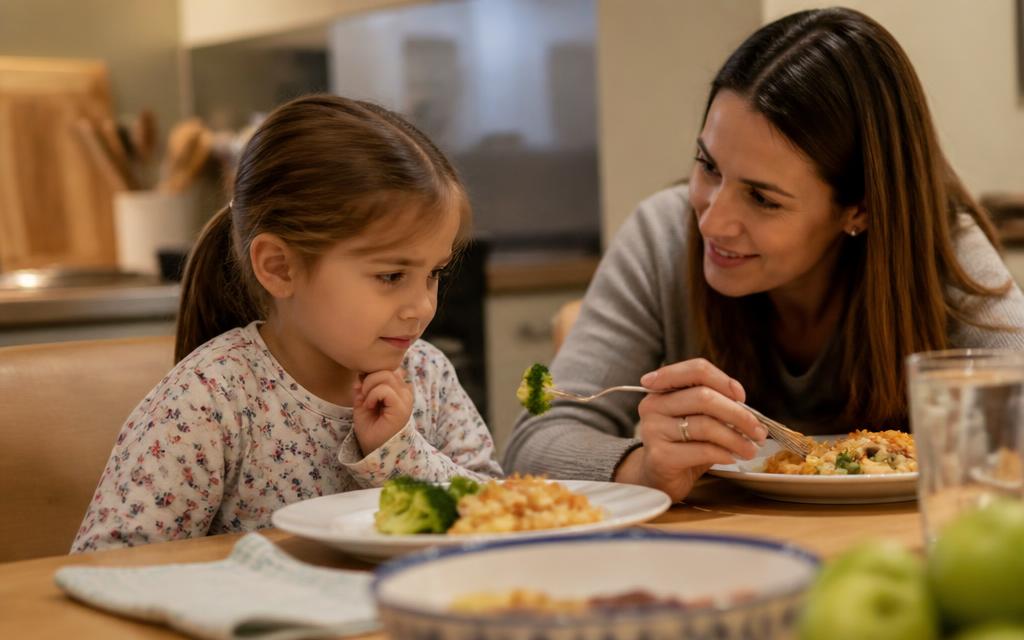
If you have ever watched your child inspect a green bean like it is a suspicious object from outer space, you are in good company. Picky eating is incredibly common, especially in the toddler and preschool years. It can also feel exhausting when you are trying to feed a family on a budget and make one meal everyone can eat.
The goal is not to force a child to love every food. It is to create calm, repeated opportunities to learn about food. With patience and a few practical routines, your child can slowly build confidence around new tastes and textures.
Start with less pressure, not more
Pressure often makes picky eating worse. When kids hear, “Just take one bite,” or “You cannot leave the table until you eat it,” they may feel anxious or dig in their heels. Even well-meaning bargaining can turn vegetables into a daily power struggle.
Try a neutral approach instead. Serve the food, let your child decide whether to touch or taste it, and keep your tone matter-of-fact.
You might say:
- “This is roasted sweet potato. It is soft and a little sweet.”
- “You do not have to eat it, but it can stay on your plate.”
- “It is okay to be learning about a new food.”
This does not mean you are giving up. You are making room for your child to practice without feeling trapped.
Keep a familiar food on the plate
A simple family meal can include one or two foods your child usually accepts alongside the new item. For example, serve chicken, rice, cucumber slices, and a small spoonful of beans. Your child may eat mostly rice and cucumber at first, and that is okay.
Avoid making a separate replacement meal after dinner if they reject the new food. Instead, serve foods everyone can eat and include something familiar. This supports your budget, protects your energy, and helps your child see that family meals are predictable.
Think tiny portions
A full serving of an unfamiliar food can look overwhelming to a child. Start with a pea-sized taste, one shredded carrot, or a single small broccoli floret. You can always offer more.
Tiny portions also reduce food waste. If your child does not touch the new food, you have not used up a whole serving. Over time, seeing that food in a low-stakes amount can make it feel less unfamiliar.
Let kids interact with food before eating it
Trying a food is not always the first step. Looking, smelling, touching, licking, or helping prepare a food all count as progress. Kids often need many exposures before they are ready to take a bite.
Invite your child to help with age-appropriate jobs:
- Wash berries or snap peas.
- Stir pancake batter or pasta sauce.
- Sprinkle cheese or herbs.
- Choose between two vegetables at the store.
- Put napkins on the table.
During the meal, let them explore without criticism. They might use a carrot stick to scoop dip or line up peas in a row. It may look like play, but they are building familiarity.
Serve new foods with a favorite dip or flavor
A familiar dip can make a new food feel safer. Hummus, yogurt dip, guacamole, mild salsa, applesauce, or a little melted cheese can work, depending on your family’s preferences.
The dip is not “cheating.” It is a bridge. Many adults enjoy salad dressing, sauces, and seasonings too. As your child gets used to the food, their preferences may change naturally.
Try food chaining
Food chaining means making small, comfortable changes from foods your child already eats. Rather than jumping from plain crackers to a mixed vegetable casserole, build one step at a time.
For example:
- If they like plain pasta, try pasta with butter and a sprinkle of parmesan.
- If they like apple slices, offer pear slices or thinly sliced cucumber.
- If they like chicken nuggets, try homemade breaded chicken strips.
- If they like yogurt, try yogurt with mashed berries stirred in.
Small shifts can feel much more manageable than a completely unfamiliar meal.
Keep your language neutral
Try not to label foods as “good,” “bad,” “junk,” or “healthy.” Kids can begin to feel shame around eating, or they may want a food more because it seems forbidden. Instead, describe foods by what they do or what they are like.
For instance: “Carrots are crunchy,” “Toast gives us energy for playing,” or “Cookies are a fun food we have sometimes.” This helps kids learn that all foods can fit, while everyday meals include a variety of nourishing options.
Eat together when you can
Children learn by watching. When possible, sit down and eat the same meal with your child. You do not need to perform enthusiasm or pretend every food is your favorite. Simply let them see you enjoy a range of foods.
Keep meals as screen-free as you reasonably can. Conversation, even short conversation, helps shift attention away from who is eating what. A simple question like “What was the funniest part of your day?” can make dinner feel more connected.
Stay consistent and notice progress
Progress may be slow and non-linear. A child might eat tomatoes one week and reject them the next. That is normal. Keep offering foods without making a big announcement, and celebrate effort quietly: “You touched the avocado today,” or “You smelled the soup.”
If you have concerns about growth, eating pain, choking, swallowing, a very limited range of foods, or possible food allergies, check with your child’s pediatric provider. For most families, though, calm repetition and realistic expectations go a long way.
Your job is to offer balanced meals and a peaceful place to eat. Your child’s job is to decide whether and how much to eat. That shared rhythm can take the fight out of food and make room for confidence to grow.