
Iron, Energy and Postpartum Fatigue: A Practical Guide for New Moms
Postpartum tiredness is common, but low iron may be one piece of the puzzle for some moms. Learn how to talk with your provider, support iron intake with budget-friendly foods, and use supplements thoughtfully.
6 min read
Those early postpartum weeks can make “tired” feel like an understatement. Broken sleep, feeding a baby, healing, managing older kids, and keeping up with basic life can drain anyone’s energy.
Iron is often part of the conversation after birth, especially if you had significant blood loss, started pregnancy with low iron, carried multiples, or are following a mostly plant-based diet. But fatigue has many possible causes, so it is important not to assume an iron supplement is the answer.
Here is a practical, no-shame way to think about iron, energy, and postpartum fatigue.
Why iron may matter after birth
Iron helps your body make hemoglobin, a protein in red blood cells that carries oxygen. Pregnancy increases the body’s need for iron, and blood loss during delivery can affect iron stores. When iron levels are low, some people may notice low energy, weakness, headaches, dizziness, shortness of breath with normal activity, or trouble concentrating.
Those symptoms can overlap with normal new-parent exhaustion and with other concerns, too. Thyroid changes, mood struggles, dehydration, inadequate calories, infection, medication effects, and sleep deprivation can all affect how you feel.
That is why a supplement aisle guess is not the best first step. Ask your obstetrician, midwife, or primary care provider whether your symptoms and birth history suggest checking iron or blood counts. They can recommend testing and a plan that fits your individual needs.
When to call your provider sooner
Fatigue alone is common postpartum, but do not push through symptoms that feel intense or sudden. Contact your provider promptly for concerns such as:
- Fainting, chest pain, or trouble breathing
- A racing heartbeat that feels new or persistent
- Heavy bleeding, large clots, or bleeding that is increasing
- Severe dizziness or inability to do usual basic activities
- Fever, worsening pain, or feeling unwell in a way that concerns you
- Persistent sadness, anxiety, hopelessness, or scary thoughts
For urgent symptoms or thoughts of harming yourself or your baby, seek emergency help right away. You deserve support, not a lecture.
Should you take an iron supplement?
Some moms are advised to continue a prenatal vitamin with iron after delivery. Others may need a separate iron supplement for a period of time. The right choice, dose, and timing depend on your lab results, how much blood you lost, your diet, your medical history, and whether you are breastfeeding.
More is not automatically better. Iron can cause constipation, nausea, stomach discomfort, and dark stools. It can also interact with certain medicines and supplements. Taking a high-dose product “just in case” may create side effects without addressing the real reason you are exhausted.
Before starting, stopping, or increasing iron, check with your provider or pharmacist—especially for pregnancy-specific questions, if you are breastfeeding, or if you take thyroid medication, antacids, antibiotics, or other regular medicines.
If your provider recommends iron, ask these simple questions:
- What dose and form do you recommend?
- When should I take it, and what should I avoid taking at the same time?
- How long should I use it?
- When should my levels be rechecked?
- What can I do if constipation or nausea becomes a problem?
Build iron into everyday meals
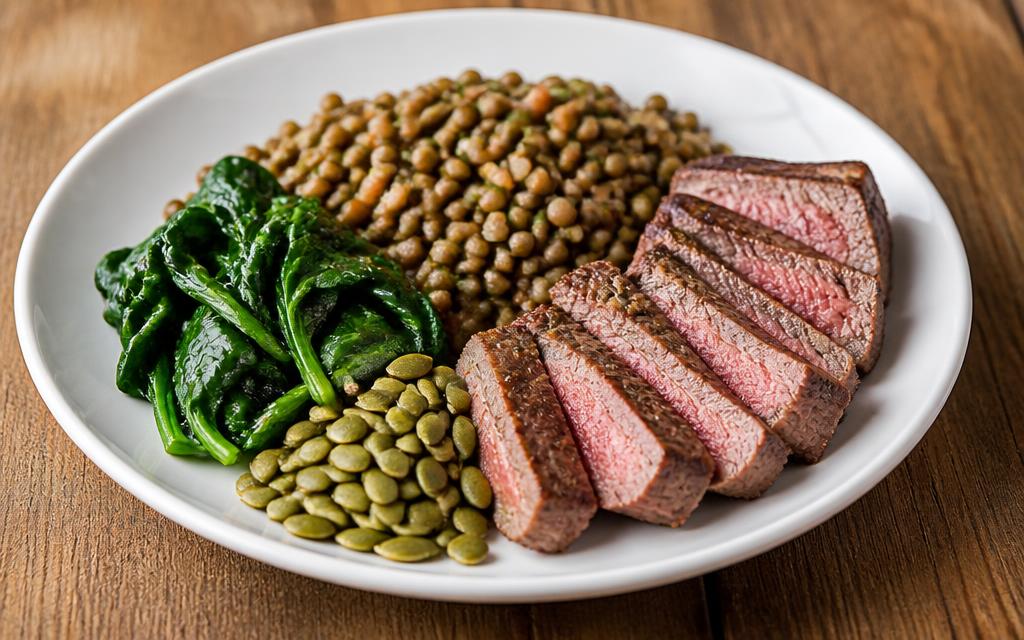
Food will not replace prescribed treatment for diagnosed low iron, but regular iron-rich meals can support your overall nutrition and help the whole family eat well.
Animal sources provide a form of iron that the body generally absorbs more easily:
- Lean beef or turkey
- Chicken thighs
- Canned tuna or salmon
- Eggs
- Sardines, if your family enjoys them
Plant sources are affordable and versatile, too:
- Lentils, beans, and chickpeas
- Tofu or tempeh
- Fortified cereal or oatmeal
- Pumpkin seeds
- Spinach and other greens
- Blackstrap molasses in oatmeal or baking
A helpful kitchen trick: pair plant-based iron foods with vitamin C foods. Think lentil chili with tomatoes, bean tacos with salsa, oatmeal with berries, or a spinach-and-egg scramble with orange slices. Vitamin C can help your body absorb iron from plant foods.
Tea and coffee can reduce iron absorption when taken with an iron-rich meal or supplement. You do not have to give up your morning coffee—because motherhood—but consider spacing it away from your supplement or iron-focused meal when possible.
Easy, budget-friendly meal ideas
Keep the goal small and repeatable. You do not need a perfect meal plan while caring for a new baby.
- Slow-cooker taco bowls: Black beans, ground turkey or beef, frozen corn, tomatoes, and taco seasoning over rice.
- Lentil pasta night: Serve lentil pasta with meat sauce or marinara, plus a bagged salad and fruit.
- Breakfast-for-dinner: Eggs, whole-grain toast, sautéed spinach, and citrus fruit.
- Snack plate lunch: Hummus, crackers, hard-boiled eggs, bell pepper strips, and grapes.
- Pantry chili: Canned beans, canned tomatoes, frozen vegetables, and whatever protein you have on hand.
Energy support beyond iron
If you are depleted, supplements are only one possible tool. Try to make your days easier in tiny ways: keep a water bottle where you feed the baby, add a protein-and-carb snack between meals, accept a grocery drop-off, and take a five-minute walk outside if it feels good.
Rest is not always available on demand, but support can be. Tell someone specifically what would help: “Can you hold the baby while I shower?” or “Can you bring a ready-to-eat dinner?”
Postpartum fatigue is real, and it is not a personal failure. If your energy feels persistently low, bring it up at your postpartum visit—or sooner. A provider can help you look beyond iron and create a plan that supports your recovery, your feeding goals, and your everyday family life.