
Postpartum Core: Rebuilding Safely After Birth
Your postpartum core deserves patience, not pressure. These gentle, practical steps can help you reconnect with breathing, posture, and everyday movement as you ease back into activity.
6 min read
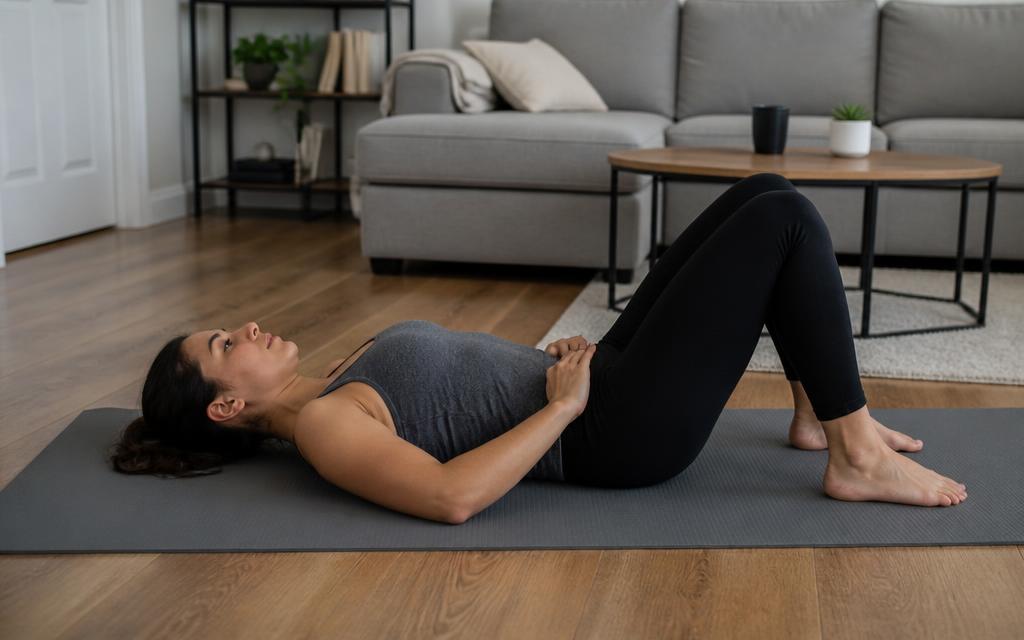
Your core is more than a set of abdominal muscles. It includes your diaphragm, deep belly muscles, back, hips, and pelvic floor—all of which work together when you stand up, lift your baby, carry groceries, or get out of bed.
After pregnancy and birth, it is completely normal for this area to feel different. You may feel weak, disconnected, stiff, or simply unsure where to begin. The goal is not to “bounce back” or rush into intense workouts. It is to rebuild trust in your body, one small repeatable movement at a time.
If you have questions about pain, bleeding, pelvic heaviness, leaking, a C-section incision, or when activity is right for you, check with your provider. A pelvic floor physical therapist can also offer personalized support.
Start with your everyday movement
Core rebuilding happens far beyond a workout mat. Think about the moments you repeat all day:
- Getting out of bed
- Picking up your baby
- Feeding and rocking
- Pushing a stroller
- Carrying a car seat or laundry basket
- Sitting at a desk or on the couch
Before lifting or standing, pause for one calm breath. Exhale gently as you make the effort—such as when you rise from a chair or lift your baby. This simple habit can help you avoid holding your breath and bracing as hard as possible.
Try rolling onto your side before sitting up from bed, especially in the early weeks. Bend your knees, roll to one side, use your arms to press yourself up, and let your legs come over the edge of the bed. It may feel slow at first, but it is a practical way to move with more comfort.
Begin with breathing, not crunches
Your diaphragm and pelvic floor respond to breath. A gentle breathing practice is often a useful first step because it helps you notice tension and reconnect with your deep core without adding a lot of pressure.
Try this for one or two minutes while lying down, reclining, or sitting comfortably:
1. Rest one hand on your ribs and one on your lower belly.
2. Inhale slowly, allowing your ribs and belly to expand naturally.
3. Exhale as if you are softly fogging a mirror or blowing through a straw.
4. As you exhale, imagine gently drawing your lower belly inward—not sucking in hard—and allowing the pelvic floor to lightly lift.
5. Relax fully on the next inhale.
Keep the effort light. Your shoulders, jaw, and bottom should not be clenched. If coordinating the breath feels confusing, simply focus on slow, relaxed breathing. That is a worthwhile practice too.
Add gentle strength when it feels comfortable
Once easy breathing and daily movement feel manageable, you can add a few low-pressure core exercises. Choose one or two at a time rather than trying to do everything. Five minutes counts.
Heel slides
Lie on your back with knees bent and feet on the floor. Exhale gently, then slowly slide one heel away from your body. Inhale as you bring it back. Alternate sides for 5 to 8 repetitions each.
Keep the movement small. If your belly domes outward, your back feels strained, or you cannot breathe smoothly, shorten the slide or return to breathing practice.
Marching in place
In the same position, exhale and slowly lift one foot just an inch or two from the floor. Lower it with control and switch sides. Aim for 5 to 8 repetitions per side.
This is not about lifting high. Staying steady and breathing easily is the win.
Supported bridge
With knees bent and feet planted, exhale and press gently through your feet to lift your hips a comfortable amount. Inhale as you lower. Try 6 to 10 slow repetitions.
A bridge can support hip and glute strength, which is helpful for all the carrying and standing new parenthood asks of you. Keep your ribs relaxed rather than flaring upward.
Bird-dog preparation
Come onto hands and knees with your hands under shoulders and knees under hips. Take a slow exhale and gently reach one leg back, keeping toes on the floor. Return and switch sides.
If that feels steady, you may eventually lift the leg slightly. There is no prize for progressing quickly.
Watch for signals to scale back
Movement should leave you feeling supported, not punished. Take a break, reduce the range of motion, or talk with your provider if you notice:
- Pain during or after movement
- Increased bleeding or feeling unwell
- Pelvic pressure or heaviness
- Leaking that concerns you
- A bulging or doming feeling through the midline of your abdomen
- Pain or pulling around a C-section incision
These are not reasons for shame. They are useful body signals that you may need more recovery time, a different exercise, or individualized guidance.
Build a routine that fits real life
The most effective postpartum movement plan is usually the one that works on a tired Tuesday. Instead of aiming for a long workout, pair a tiny core practice with something you already do.
You might try:
- Three slow breaths after brushing your teeth
- Five heel slides while your baby plays nearby
- A short stroller walk after lunch
- A few supported bridges before your evening shower
On hard days, rest is part of the plan. Sleep changes, feeding schedules, recovery, and emotional adjustment all affect your energy. Your body does not need perfection; it needs consistency, nourishment, and kindness.
Progress slowly and celebrate function
As you feel stronger, you can gradually add longer walks, bodyweight strength work, or classes designed for postpartum bodies. Focus on everyday victories: carrying your baby with less discomfort, standing taller at the counter, or feeling more confident getting off the floor.
Your postpartum core is not a problem to fix. It is a part of you adapting to a major life and body change. Start gently, keep your expectations realistic, and let strength build at your own pace.