
Strength Training at Home With Two Dumbbells and No Gym
A pair of dumbbells can support a simple, flexible strength routine that fits real life with kids. Learn how to build balanced home workouts, choose practical weights, and make movement work in pregnancy, postpartum, or everyday mom life.
6 min read
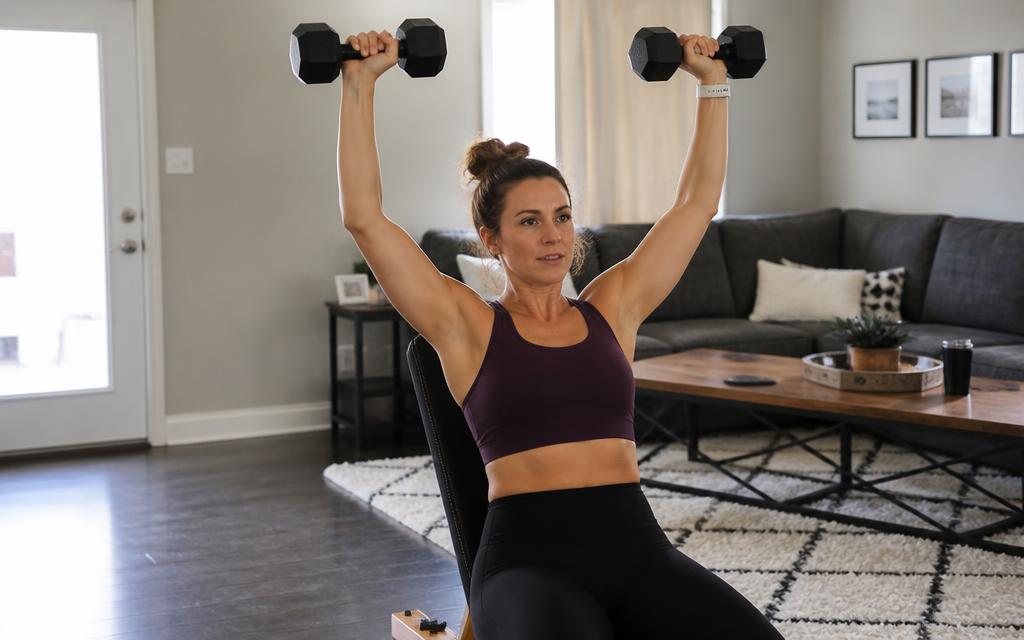
You do not need a gym membership, a wall of equipment, or a full uninterrupted hour to build strength. Two dumbbells, a little floor space, and a realistic plan can go a long way.
For moms, home strength training is less about chasing a perfect workout and more about making everyday life feel more manageable. Think lifting a growing toddler, carrying groceries, getting up and down from the floor, and having energy for the people you love. Start where you are, use what you have, and let consistency be the goal.
Why two dumbbells are enough
Dumbbells are wonderfully versatile. With one pair, you can train your legs, hips, back, chest, shoulders, arms, and core using simple movements. You can also make an exercise feel harder without buying more gear by slowing down, adding repetitions, or doing one side at a time.
A basic strength routine can help you create a regular movement habit without leaving the house. It is also easy to pause when a baby needs you, fit into naptime, or divide into two short sessions on a busy day.
There is no need to make every workout intense. The best routine is one you can return to next week.
Choosing your dumbbells
If you are buying your first pair, choose a weight that feels challenging but manageable for about 8 to 12 controlled repetitions of a basic exercise, such as a squat or row. Many beginners like having two pairs eventually: one lighter pair for upper-body moves and one heavier pair for lower-body moves.
If one pair is all that fits your budget right now, that is completely fine. Use these adjustments to get more from it:
- Hold one dumbbell with both hands for squats, deadlifts, and bridges.
- Use both dumbbells when the movement feels comfortable.
- Perform one side at a time for rows, presses, and split squats.
- Slow the lowering phase to three seconds.
- Add a pause at the hardest part of the movement.
- Increase repetitions before rushing to buy heavier weights.
You should feel like you are working near the end of a set while still able to keep good form. If you are straining, holding your breath, or losing control, use fewer repetitions or a lighter weight.
The home strength basics
A balanced full-body workout usually includes these movement patterns:
- Squat: sitting down and standing up, like a goblet squat.
- Hinge: bending at the hips, like a dumbbell deadlift.
- Push: pressing weight away, like a floor press.
- Pull: drawing weight toward you, like a bent-over row.
- Carry or core stability: holding weight while standing or moving with control.
You do not have to do every variation at once. A few familiar moves performed well are more useful than a complicated plan you dread.
A simple two-dumbbell workout
After a few minutes of easy marching, shoulder rolls, or walking around the house, try this full-body circuit. Begin with one or two rounds. As it becomes more comfortable, build toward two or three rounds.
1. Goblet squat — 8 to 12 reps
Hold one dumbbell close to your chest. Sit your hips back and down as if aiming for a chair, then stand tall. Keep the range of motion comfortable for your body.
2. Dumbbell deadlift — 8 to 12 reps
Hold dumbbells in front of your thighs. Soften your knees, send your hips back, and lower the weights along your legs. Stand by pressing through your feet and gently squeezing your glutes.
3. Supported one-arm row — 8 to 12 reps per side
Place one hand on a chair, couch, or countertop for support. Pull the dumbbell toward your hip, keeping your shoulder away from your ear. Lower with control.
4. Dumbbell floor press — 8 to 12 reps
Lie on the floor with knees bent, or use a comfortable elevated surface if getting down to the floor is not ideal. Press the dumbbells upward, then lower until your upper arms lightly touch the floor.
5. Seated shoulder press — 6 to 10 reps
Sit tall in a sturdy chair. Start with dumbbells around shoulder height and press overhead only as far as feels comfortable. A lighter weight is often best here.
6. Suitcase hold or carry — 20 to 30 seconds per side
Hold one dumbbell at your side and stand tall without leaning. If space allows, walk slowly around the room. This is simple, practical core work.
Rest for about 30 to 90 seconds whenever you need it. Quality matters more than speed.
Make it fit your season of life
A workout does not need to be all-or-nothing. On a hectic day, choose three exercises and do one set. On a higher-energy day, add another round or take a short walk afterward.
Try one of these realistic schedules:
- Two days a week: Complete the full circuit twice.
- Three short days: Choose three exercises each day and do two sets.
- Movement snacks: Do one set of squats while dinner cooks, rows after school pickup, and a carry while tidying up.
If you are pregnant, newly postpartum, returning after a long break, or have pain, leaking, pressure, dizziness, or other symptoms that concern you, pause and check with your healthcare provider or a qualified pelvic health professional. Pregnancy and postpartum needs can be very individual, and modifications are a smart part of caring for yourself.
Keep the goal small and kind
Strength training at home is not a test of willpower. It is a way to practice showing up for your body in a season that may already ask a lot of you.
Pick two days this week. Put your dumbbells somewhere visible. Start with one round, even if it takes only 10 minutes. That small, repeatable effort counts—and it can grow with you over time.