
Ten-Minute Workouts That Actually Work When the Kids Are Awake
You do not need a quiet house, special equipment, or a full hour to build a movement habit. These realistic 10-minute workouts are designed for the wonderfully unpredictable moments when your kids are right there with you.
6 min read
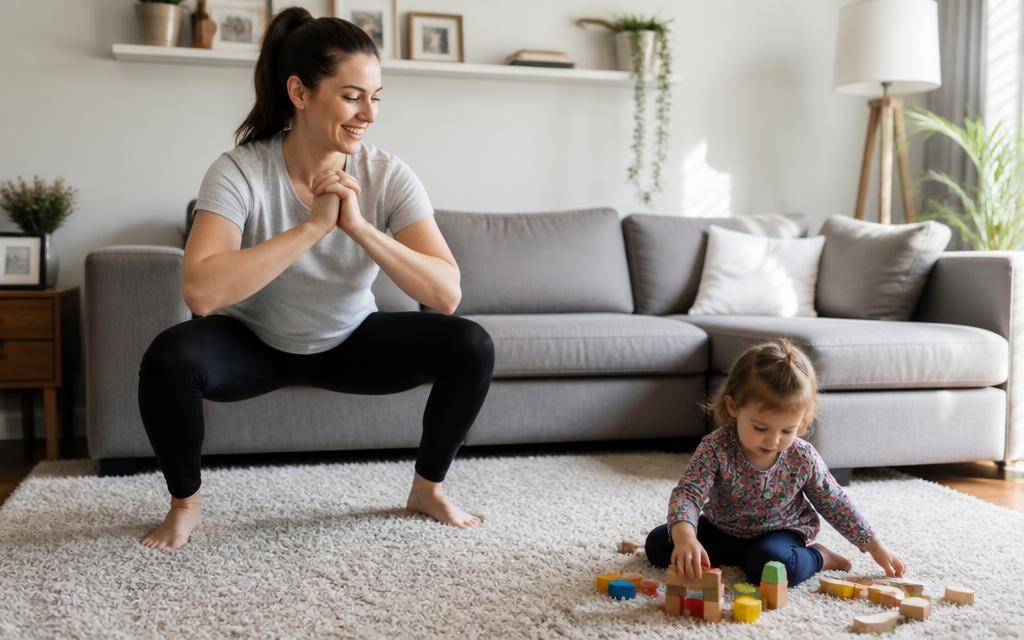
Some days, a traditional workout is simply not happening—and that does not mean movement is off the table.
When kids are awake, your best plan is often a short one: simple moves, a little flexibility, and zero expectation that everyone will stay quiet. Ten minutes can be enough to lift your energy, support everyday strength, and help you keep a promise to yourself.
The goal is not to “make up” for food, earn rest, or chase perfection. It is to fit a little caring movement into real family life.
Make the plan kid-proof, not perfect
Before you start, choose a small clear space and let the kids know what is happening: “Mom is moving for 10 minutes. You can join me, draw nearby, or play with these blocks.” Younger kids may climb on you, copy your moves, or need a snack halfway through. That is normal.
A few practical ways to make it easier:
- Keep shoes optional for indoor, low-impact movement if that feels comfortable and safe.
- Set a 10-minute timer rather than watching the clock.
- Use a favorite song playlist, a stroller, a chair, or your own body weight—no fancy gear needed.
- Count interruptions as part of the workout, not proof that it failed.
- Aim for an effort where you can still speak in short sentences.
If you are pregnant, newly postpartum, recovering from birth, or managing pain or other health concerns, check with your provider about what movement is appropriate for you.
Workout 1: The living-room strength circuit
This is a great choice when the kids are playing nearby. Do each move for 45 seconds, then rest or transition for 15 seconds. Complete the circuit twice.
1. Chair squats: Stand in front of a sturdy chair, sit back with control, then stand tall. Use the chair as much as you need.
2. Wall push-ups: Place your hands on a wall, step your feet back, bend your elbows, and press away.
3. Marching in place: Lift one knee at a time at a comfortable pace. Add arm swings if that feels good.
4. Glute bridges: Lie on your back with knees bent and feet on the floor. Press through your feet to lift your hips, then lower slowly.
5. Bird dogs: From hands and knees, reach one arm and the opposite leg long. Switch sides. Keep the movement small and steady.
No floor space? Swap glute bridges and bird dogs for standing side steps and gentle calf raises.
Workout 2: The “copy me” dance break
Kids often love this one because there are no rules. Put on two or three songs and move together for 10 minutes.
Try rotating through easy patterns:
- March for one chorus.
- Step side to side and clap overhead if comfortable.
- Do gentle knee lifts.
- Reach up, reach across, and make big arm circles.
- Add a few sit-to-stands from the couch or chair between songs.
- Let each child choose one silly move for everyone to copy.
Dance is not less valuable because it is playful. If it gets your heart rate up a little, loosens your body, and makes you smile, it counts.
Workout 3: The stroller or driveway walk intervals
If getting outside helps everyone reset, use a 10-minute walk with simple intervals. You do not need to run.
- Walk easily for 2 minutes.
- Walk briskly for 1 minute.
- Return to an easy pace for 1 minute.
- Repeat that brisk/easy pattern three more times.
A brisk pace is personal. For some days, it may mean a purposeful stroll; for others, it may mean pushing uphill or taking bigger arm swings. Bring water when needed, follow weather safety basics, and keep the plan flexible around naps, snacks, and moods.
Workout 4: The kitchen-counter reset
Waiting for pasta water to boil? Try this quiet, standing routine. Move through each exercise for one minute, then repeat once.
- Counter push-ups
- Slow bodyweight squats or sit-to-stands
- Standing side leg lifts, alternating sides
- Calf raises while holding the counter
- Gentle standing torso reaches from side to side
This routine is especially useful on days when starting feels hard. You are already in the kitchen, so there is less setup and less pressure to do more.
How to make 10 minutes add up
A short workout “works” when it is something you can return to. One 10-minute session may not transform your week, but repeated small sessions can build confidence, strength for daily parenting tasks, and a steadier routine.
Try choosing a simple weekly target, such as:
- Three 10-minute movement breaks this week
- One family dance break after dinner
- A stroller walk on two mornings
- One strength circuit while the kids play
Keep the bar low enough that you can clear it during a messy week. If you have extra time or energy, add another round, take a longer walk, or stop at 10 minutes and feel good about it.
Your kids do not need to see a perfectly polished workout. They can see a parent taking care of herself in a realistic way—and maybe joining in with a few joyful, wobbly squats of their own.