
The 20-Minute Stroller Walk That Feels Like a Workout (Without Making Life Harder)
Turn a regular stroller walk into a simple, low-pressure movement routine with gentle pace changes and practical strength stops. It is designed to fit real nap schedules, budgets, and postpartum energy levels.
6 min read
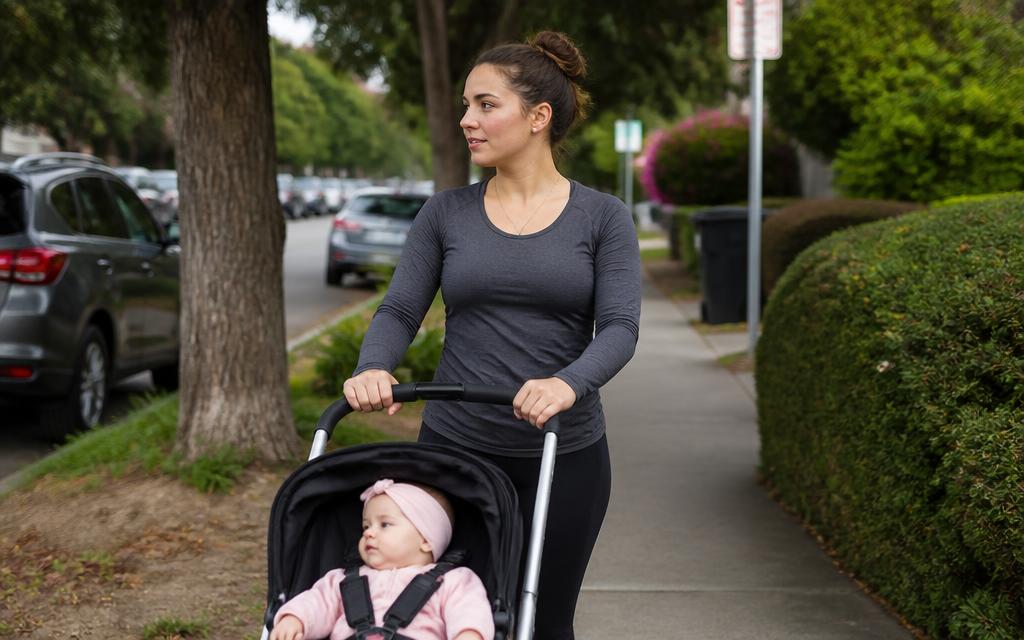
Some days, getting yourself and a baby out the door is the whole accomplishment. A stroller walk still counts as movement, even when it is slow, short, or interrupted by a snack, a diaper change, or a very important look at a leaf.
When you have a little more energy, you can make that same walk feel more refreshing and full-body—without needing a gym membership, special equipment, or a complicated plan. The secret is simply changing your pace a few times and adding a few intentional pauses.
This is not about pushing through exhaustion or “earning” food. It is a flexible way to build movement into a day that already has a lot going on.
If you are pregnant, newly postpartum, recovering from a birth, or have pelvic-floor, pain, bleeding, dizziness, or other health concerns, check with your provider before starting or changing an exercise routine. Your plan should fit *your* body and season.
Start with a realistic goal
A 20-minute walk is a great target, but it is not a rule. Try one of these versions instead:
- 10 minutes: Walk to the corner and back, with one easy pace change.
- 20 minutes: Use the routine below at a comfortable effort.
- Two 10-minute walks: One in the morning and one later in the day.
- Indoor version: Walk loops in a hallway, around your living room, or through a large store while running errands.
Your pace should allow you to speak in short, comfortable sentences. If you are breathless, tense, or unable to control your breathing, ease up.
Your simple stroller-walk routine
Use a route with mostly smooth, level ground when possible. Lock the stroller wheels as recommended by the manufacturer, use the wrist strap if your stroller has one, and make sure your little one is secured properly.
1. Easy warm-up: 4 minutes
Begin at a relaxed pace. Let your shoulders drop away from your ears and keep a light hold on the stroller handle instead of leaning your body weight forward.
Try this posture check as you walk:
- Stand tall through your chest without over-arching your back.
- Keep your gaze ahead instead of down at the stroller.
- Take smaller, steady steps rather than long strides.
- Let your ribs stay stacked over your hips as comfortably as you can.
No need to make it perfect. A quick reset whenever you notice yourself hunching is enough.
2. Brisk-but-manageable walk: 2 minutes
Pick up your pace slightly. Think “late for an appointment, but not running.” Keep your hands relaxed and your breathing steady.
3. Recovery walk: 2 minutes
Slow back down. This is a useful part of the workout, not wasted time. It gives your body a chance to settle before the next round.
4. Repeat the brisk and recovery pattern: 3 times
Alternate 2 minutes brisk and 2 minutes easy for a total of 12 minutes. If that feels like too much today, do one or two rounds. If it feels good, stay with the same pace rather than making every round harder.
5. Easy cool-down: 4 minutes
Return to an easy stroll. Notice how you feel: energized, tired, tight, thirsty, or ready to be done. This check-in helps you choose a pace that supports your day instead of draining it.
Add optional strength stops
If your provider has cleared you for this type of movement and you feel comfortable, add one or two stops during the walk. Park the stroller on level ground, lock it, and stay close.
Choose one move at each stop:
- Park-bench sit-to-stands: Sit down and stand up from a sturdy bench 6–10 times. Use your hands for support if needed.
- Calf raises: Hold the stroller handle or a railing and lift your heels slowly 8–12 times.
- Wall push-ups: Place your hands on a wall, step back slightly, and do 6–10 gentle push-ups.
- Standing side steps: Take 8–10 slow steps to each side, keeping your knees soft.
Skip anything that causes pain, pressure, leaking, heaviness, pulling at an incision, or a feeling that something is not right. Those are useful signals to pause and ask your provider for individualized guidance.
Make it work on a family budget
You do not need workout clothes, a fitness tracker, or a fancy stroller route. Use what is nearby:
- Walk around your block, apartment complex, school track, or local park.
- Bring water from home and a simple snack if you will be out around feeding time.
- Invite a neighbor or another parent for built-in conversation and accountability.
- Save a favorite podcast or audiobook for walks if that makes the time more enjoyable.
- Keep a small weather kit by the door: sunscreen, a light layer, rain cover, and a reusable water bottle.
On difficult days, set the bar low: shoes on, baby strapped in, five minutes outside. Often that is enough. And if it is not, you can come home knowing you listened to what your body needed.
The habit matters more than the intensity
A stroller walk routine works best when it feels repeatable. You might do it twice a week, every weekday, or only when naps and moods line up. There is no gold star for following a perfect schedule.
Think of this as a menu, not a mandate: easy walk when you need fresh air, pace changes when you want a little more energy, and strength stops when they fit. Small, steady movement can be a practical way to care for yourself while caring for everyone else.